
Garage Door Won't Open: A Diagnostic Walkthrough
A dead garage door can mean anything from a tripped sensor to a snapped spring. This walkthrough shows you how to narrow down the real cause, step by step, before you decide what to do next.
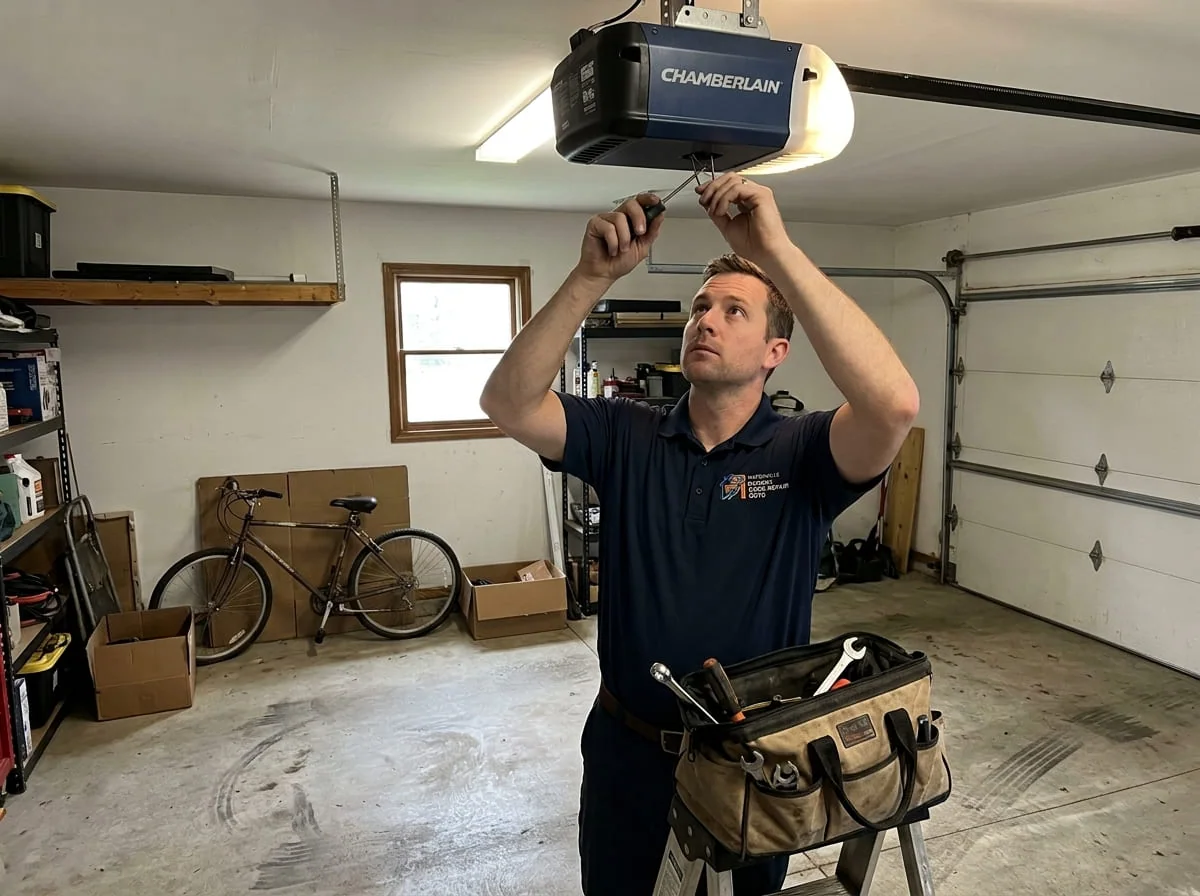
Why "It Won't Open" Rarely Means One Thing
I get some version of this call almost every week: "My garage door won't open, and I don't know why." It's one of the vaguest problems in this trade, because a dead door can point to six or seven completely different failures, and half of them look identical from the driver's seat. A tripped sensor and a snapped spring can both leave you sitting in the driveway pressing a remote that does nothing.
The good news is that a garage door system gives you a lot of clues if you know where to look. The opener, the springs, the cables, the tracks, and the sensors each fail in their own distinct way, and most of them leave a signature — a sound, a light pattern, a specific way the door moves or doesn't move. This walkthrough is built in the order I actually work through a service call: cheapest and safest checks first, more serious mechanical issues later. Work through it in order and you'll usually know what you're dealing with before you ever pick up the phone.
Step One: Listen and Look Before You Touch Anything
Before you touch a single bolt, stand in the garage and press the wall button or remote, and pay attention to what actually happens. This takes thirty seconds and it's the single most useful diagnostic step there is.
- Nothing happens at all — no light, no sound. That points to power: a tripped breaker, an unplugged opener, or a dead remote battery. Check the outlet the opener is plugged into first; garage outlets are often on a GFCI circuit that trips quietly.
- The opener light comes on and the motor hums, but the door doesn't move. This usually means the motor is trying to work against resistance it can't overcome — often a broken spring, since the opener was never designed to lift the full weight of the door on its own.
- You hear a motor running, and something is moving, but not the door. This points to the trolley, the drive gear, or a disconnected carriage — mechanical failure inside or along the opener rail itself.
- The opener's indicator light blinks a set number of times instead of running normally. Most openers use blink codes to report a specific fault, commonly a sensor alignment problem. Check your opener's manual (or the manufacturer's support site) for what that count means on your model.
Write down what you observed. It matters for the next few sections, and if you do end up calling a technician, it cuts real time off the visit.
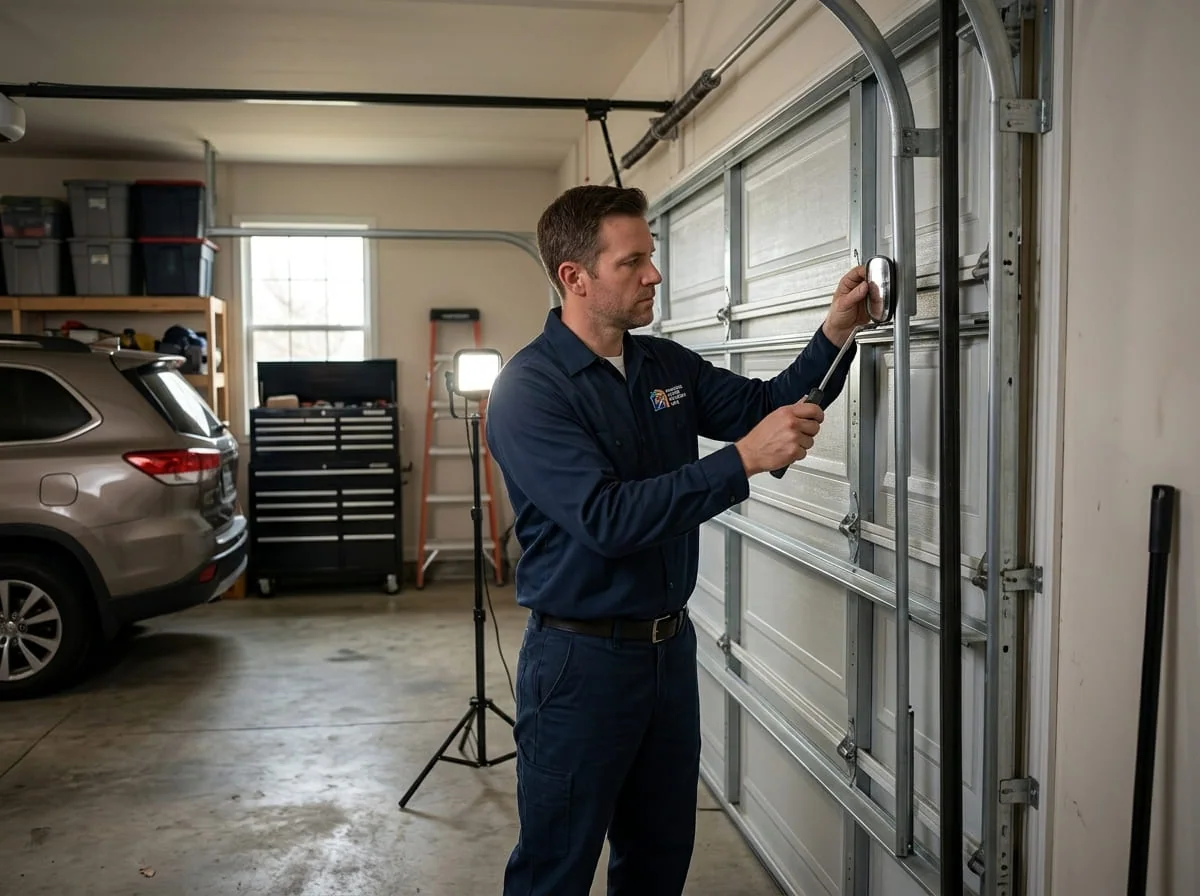
The Most Common Culprit: Misaligned Safety Sensors
If your opener runs — meaning the motor clearly turns on — but the door won't budge, or it starts to close and immediately reverses, check the safety sensors before anything else. In my experience this is the single most common reason for a door that "won't open" or "won't close" and it costs nothing to fix.
Every residential opener built in the last few decades has two small photo-eye sensors mounted a few inches off the floor on either side of the track, connected by a thin wire. They send an invisible beam across the doorway. If anything blocks that beam — a stray leaf, a coiled hose, a shifted bike, spiderwebs, or even direct sunlight hitting one sensor's lens at a certain angle — the opener refuses to close the door, and depending on the model, it can also refuse to complete an opening cycle or will reverse mid-motion.
Walk over and check both sensors: are the LED indicator lights on each one solid, not blinking? Are the brackets straight, with both lenses aimed directly at each other across the opening? A bump from a car, a bike, or even a broom handle can knock one out of alignment by just enough to break the beam. Wipe both lenses with a soft cloth, clear anything sitting in the sensor path, and gently realign the brackets so the lights go solid. Then try the door again.
If you want a deeper walkthrough of sensor troubleshooting, including how to read specific blink and beep patterns, we've written a full guide on garage door safety sensors that covers it in more detail than we have room for here.
Broken or Weak Springs: A More Serious Cause
If the sensors check out fine and the opener still hums without lifting the door, or the door only rises an inch or two before stalling, look up at the springs mounted above the door opening. This is where I want you to stop troubleshooting with your hands and start troubleshooting with your eyes only.
Most residential sectional doors today run on a torsion spring system — one or two heavy springs wound tightly around a metal shaft directly above the door, under serious tension. A torsion spring that's cracked or split will usually show a visible gap in the coil, and you may have heard a loud bang from the garage in the hours or days before, which is the sound of a spring letting go. Older or lower-end setups sometimes use extension springs instead, mounted along the upper tracks on each side; these run under less visible tension but should always have a safety containment cable threaded through them, a requirement the U.S. Consumer Product Safety Commission put in place specifically because an uncontained extension spring can become a projectile if it snaps.
Garage door openers are built to assist a properly-sprung door, not to lift the door's full weight on their own. When a spring breaks, the opener motor is suddenly doing a job it was never designed for, which is exactly why you'll hear it straining and see the door barely move, or not move at all. Never try to force a door open manually or with the opener when you suspect a broken spring — the counterbalance that normally makes an average sectional door liftable by hand is gone, and the door can drop suddenly and without warning.
Spring failure isn't random bad luck. Torsion springs are rated for a certain number of open-close cycles before they're expected to fatigue and break, a figure manufacturers publish and test against under DASMA's TDS-190 and ANSI/DASMA 102 standards. Temperature swings, how often the door gets used, and whether the spring was sized correctly for the door's weight in the first place all affect where a given spring lands in its expected lifespan. If you've had this door a decade or more and don't recall the springs ever being replaced, a break is not surprising.
If you suspect a broken spring, stop here and treat it as a job for a professional. We cover the mechanics of these systems, and how to tell which type you have, in our broken spring repair service page.
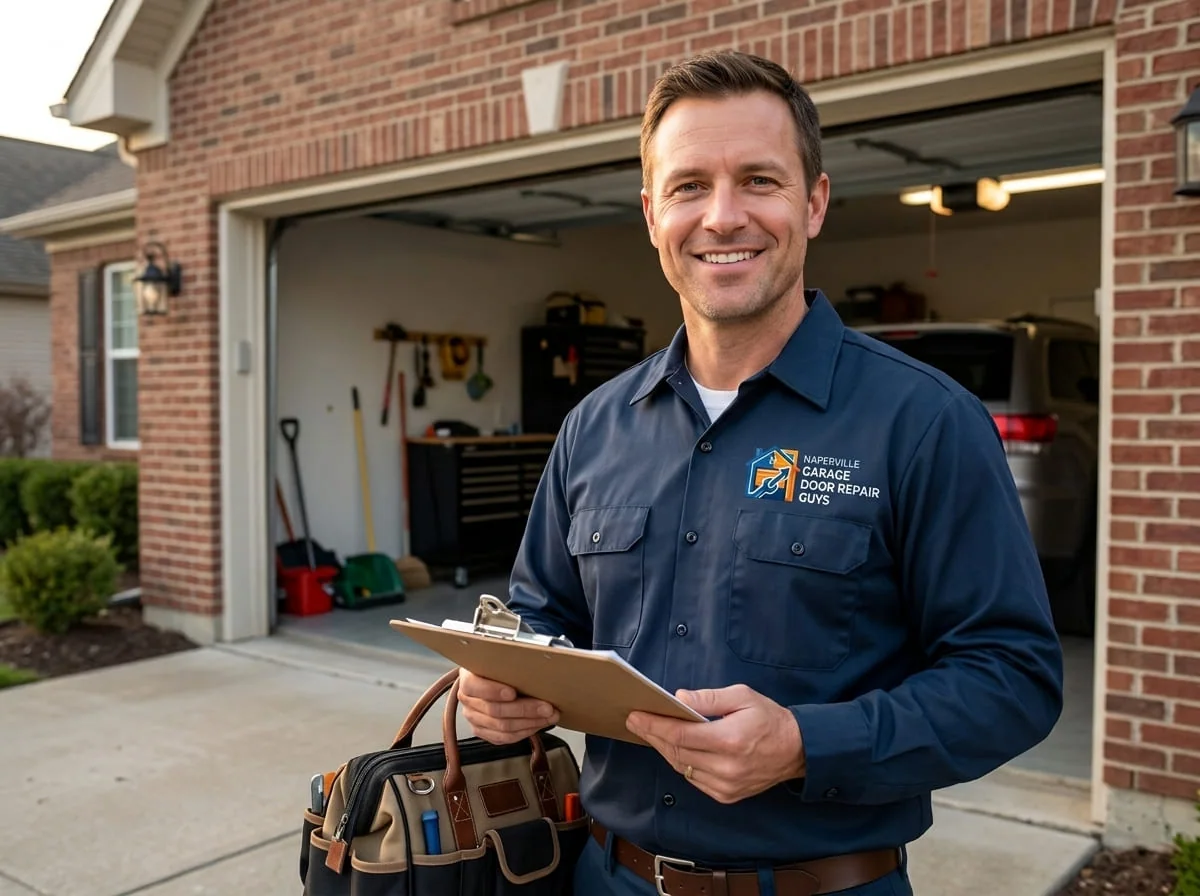
Cables, Rollers, and Tracks: When the Door Binds
Sometimes the springs are intact but the door still won't move smoothly, and instead it jerks, tilts to one side, grinds, or gets partway up and stops. That points toward the mechanical parts that guide the door rather than the parts that lift it.
| What you see or hear | Likely cause | Safe to inspect yourself? |
|---|---|---|
| Door hangs crooked, one side higher than the other | Broken or frayed lift cable on one side | Look only — don't operate the door |
| Grinding or scraping noise from one side of the track | Bent track, or rollers worn out and binding | Yes, visual check is safe |
| Door stops partway and reverses on its own | Obstruction in the track, or a track knocked out of alignment | Yes, clear visible debris only |
| Door pops off the track entirely | Off-track door, often from a broken cable or roller failure | No — stop and call a technician |
Lift cables run alongside the springs and take on real load every time the door cycles. A frayed or snapped cable throws the door's balance off immediately and unevenly, which is why a door with a cable problem so often hangs crooked rather than simply refusing to move. Rollers, meanwhile, wear out gradually — nylon rollers especially can turn brittle over years of use and temperature swings, making the door louder and rougher well before they fail outright.
A door that's come off its track is not a DIY repair. The tension involved and the risk of the door dropping make it a job for someone with the right clamps and experience. If your door is currently off-track, don't try to muscle it back into the channel — we go through exactly why in our off-track garage door repair guide, and it's worth a read before you touch anything.
Opener, Gears, and Remote Problems
If the door itself moves freely by hand — pull the release cord, and if it lifts smoothly and stays roughly where you put it, the springs and balance are fine — but the opener won't drive it, the problem is isolated to the opener unit itself.
Common opener-side failures include a stripped internal drive gear (often plastic by design, meant to fail before something more expensive does, and it usually announces itself with a grinding sound and a chain or belt that isn't actually moving the trolley), a disconnected or damaged trolley carriage, a dead or failing motor capacitor, or simply a remote and wall control that have lost programming after a power outage. Check the manual wall button first: if pressing it operates the door normally but the remote doesn't, the fix is almost always as simple as replacing a battery or reprogramming the remote to the opener, not a repair call at all.
If the wall button doesn't work either, and you've ruled out a tripped breaker, the opener's logic board or motor itself may have failed. That's a straightforward, well-understood repair, and one we handle often — see our garage door opener repair page for what a typical service visit for this looks like.
What Cold Illinois Mornings Do to a Garage Door
Western suburbs winters add a layer to all of this that homeowners in milder climates don't have to think about. January mornings around Naperville regularly sit near freezing or below, and that cold works against a garage door system in several specific ways.
Torsion springs lose tension as steel contracts in cold weather, and a spring that was already near the end of its cycle life is more likely to snap on a cold morning than a mild one — it's a genuinely common pattern, not a coincidence, and one reason winter spring failures cluster the way they do. Metal tracks contract too, which can be enough to bind rollers that were already borderline. Nylon rollers themselves get more brittle in cold temperatures, and opener lubricant thickens, making the whole mechanism run stiffer and louder until things warm up. Freeze-thaw cycles can also shift a concrete slab or apron slightly over years, which throws off track alignment at the base of the door in ways that show up gradually rather than all at once.
None of this means a door won't open for mysterious reasons every winter — it means the same underlying wear (an aging spring, a slightly bent track, rollers already due for replacement) tends to reach its breaking point on the coldest mornings, because cold removes whatever margin was left. If your door has been getting louder or stiffer for weeks and then quits on a 10-degree morning, that's not bad luck, that's the cold finishing a job that was already most of the way done.
When to Stop Troubleshooting and Call a Technician
Everything in the first two sections — checking power, checking the remote, checking sensor alignment and clearing debris from the sensor path — is safe to do yourself and solves a real share of "won't open" calls on its own. Past that point, I'd rather you call someone than get hurt or make a small problem worse.
Stop and call a professional if any of the following is true: you see a gap in a torsion spring or heard a bang before the door failed, a cable looks frayed or the door hangs unevenly, the door has come off its track, or you simply don't know which of these you're looking at. A door under spring tension, or one that's already lost its balance, can move suddenly and with real force. That's not a risk worth taking to save a service call.
When you do call, having already worked through the sections above gives a technician a running start: what you heard, what the opener light did, whether the door moves by hand, whether the sensors were aligned. We provide upfront, honest pricing and explain what's actually wrong before we touch anything — free quotes, no surprises, and we'll always tell you honestly if a repair makes more sense than starting fresh. If your door is due for more than a repair, our guide on signs you need a new garage door is worth a look too.

Pete Voss
Owner and lead technician at Naperville Garage Door Repair Guys, serving Naperville, IL since 2012.
FAQs
Why does my garage door opener hum but the door doesn't open?
A humming motor that doesn't lift the door almost always means the opener is straining against resistance it isn't built to overcome — most often a broken or badly weakened spring. The opener is designed to assist a properly balanced door, not lift its full weight, so a spring failure will make the motor run while the door barely moves or doesn't move at all. Don't keep pressing the button hoping it'll catch; disconnect the opener and have the spring inspected.
Can I open my garage door manually if I think a spring is broken?
You can pull the manual release to disconnect the opener, but expect the door to feel extremely heavy and behave unpredictably, since the spring's job is to counterbalance the door's full weight. Have another person help if you must move the door at all, keep hands and fingers clear of the track and hardware, and treat this as a short-term move to get a vehicle out — not a long-term workaround. Get the spring replaced before using the door normally again.
Is it dangerous to try fixing a garage door myself?
Some checks are genuinely low-risk: confirming power, checking a remote battery, wiping off and realigning safety sensors, or clearing visible debris from the track. Anything involving springs, cables, or a door that's come off its track carries real risk, since those parts are under significant stored tension. That combination of high tension and heavy moving parts is exactly why professional installers exist for this kind of work, rather than it being a routine weekend project.
How do I tell if the problem is the sensors and not the spring?
Watch the opener's behavior closely. A sensor problem typically lets the opener run normally but causes the door to refuse to close, reverse midway, or blink an error code, while the door still moves easily by hand when disconnected from the opener. A spring problem shows up as the opener motor straining or humming while the door itself barely moves, and the door will feel unusually heavy if you try to lift it manually. Checking the sensor lights and alignment takes two minutes and rules out the easiest explanation first.
Why does my garage door only open partway and then stop?
This usually points to either an obstruction the safety sensors are detecting, a track that's bent or knocked out of alignment at some point along its length, or a cable that's slipping and throwing the door off balance mid-cycle. Check for anything blocking the sensor beam first, since that's the easiest fix, then look along both tracks for visible damage or debris before assuming it's a bigger mechanical issue.
How much does it cost to diagnose and fix a garage door that won't open?
Cost depends on what's actually wrong — a sensor realignment costs nothing, while spring, cable, or opener repairs vary based on parts and labor involved. Rather than guess at a number that wouldn't be accurate for your situation, we provide a free, upfront quote once we've actually looked at the door, and we'll explain what we find in plain language before any work begins.
Have a Garage Door Problem Right Now?
Skip the guesswork — call Naperville Garage Door Repair Guys for a fast, honest diagnosis.