
Garage Door Safety Sensors: Why They Fail and How to Fix Them
Safety sensors are the reason your garage door refuses to close or reverses for no obvious reason. Here's how they actually work, what causes most failures, and which fixes are safe to try yourself.
What Safety Sensors Actually Do
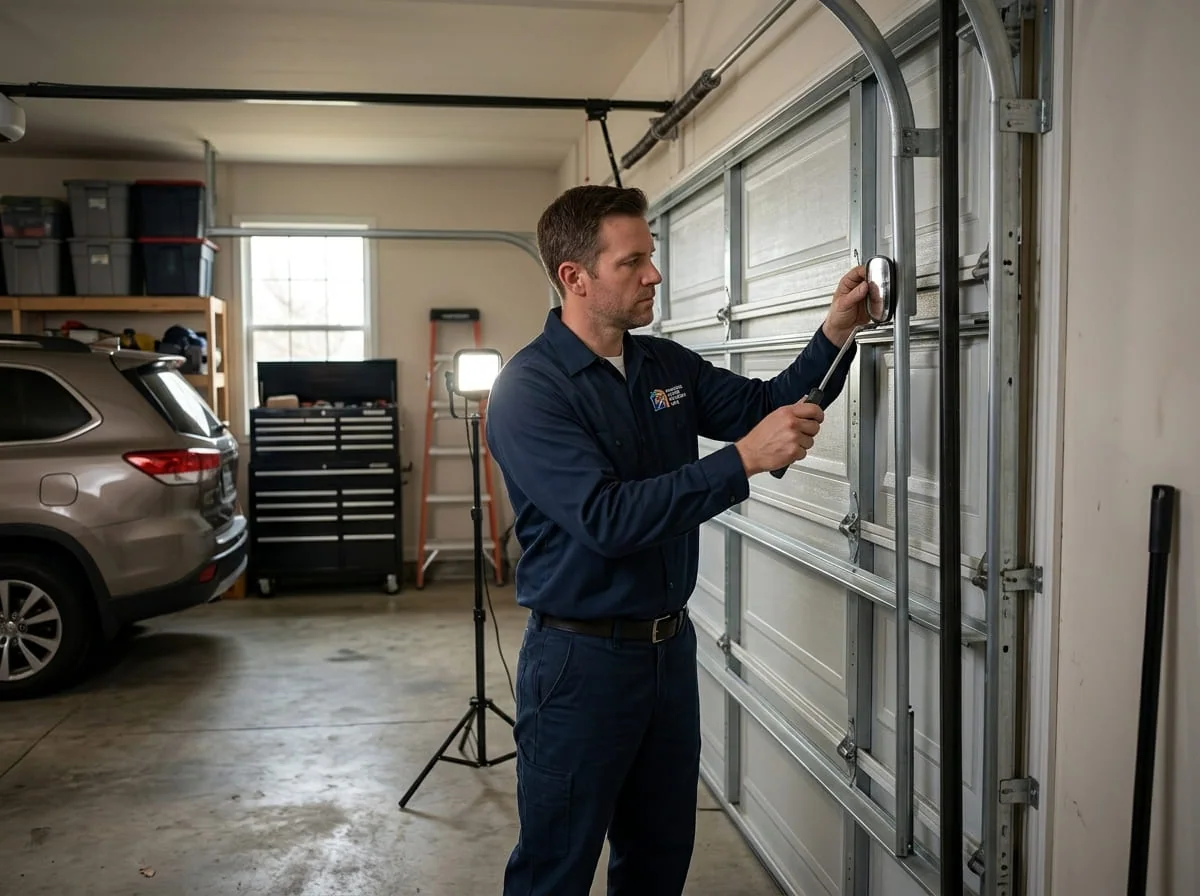
Every residential garage door built since 1993 has a pair of photo-eye sensors mounted a few inches off the floor on either side of the track, usually held on by a plastic wing bracket. One sensor sends a continuous infrared beam; the other receives it. As long as that beam is unbroken, the opener is free to close the door. Break the beam with a bike, a trash can, a kid, or a pet while the door is on its way down, and the opener reverses the door back open instead of letting it keep coming down on whatever tripped it.
This isn't an optional convenience feature. It's a federally mandated safety system. The U.S. Consumer Product Safety Commission required external entrapment protection, including these photo-eye sensors, on all residential garage door openers manufactured after January 1, 1993, specifically because openers without them were closing on children and pets with enough force to cause serious injury or death. If your opener predates that requirement and has never been retrofitted, that's a genuine safety gap worth addressing, not a quirky old-house feature to leave alone.
Because the system is designed to fail safe, almost every sensor problem shows up the same way: the door won't close, or it closes partway and reverses. That's the opener doing exactly what it's supposed to do when it can't confirm the beam is intact — it's just usually confirming a wiring or alignment problem, not an actual obstruction.
The Two Most Common Symptoms
Sensor trouble almost always presents one of two ways, and knowing which one you have narrows down the cause fast.
- The door won't close at all. You hold the wall button or remote, the door starts down, and it immediately reverses back to full open — sometimes within an inch of travel. This usually means the opener isn't detecting a clear, aligned beam between the two sensors at all.
- The door closes fine sometimes, but not others. This intermittent pattern points toward something environmental — sun angle at a certain time of day, a sensor that's slightly loose and vibrates out of alignment, or a marginal wiring connection that makes and breaks contact.
On most openers, the indicator LEDs on the sensors themselves tell you a lot before you touch anything. A steady, solid light on both sensors (check your opener's manual for the exact color scheme — LiftMaster and Chamberlain-style systems commonly use a steady green receiver light and a dim indicator on the sender) usually means good alignment. A flickering, dim, or completely dark light on either unit means the beam isn't landing correctly.
Sensor Misalignment: The Number One Cause
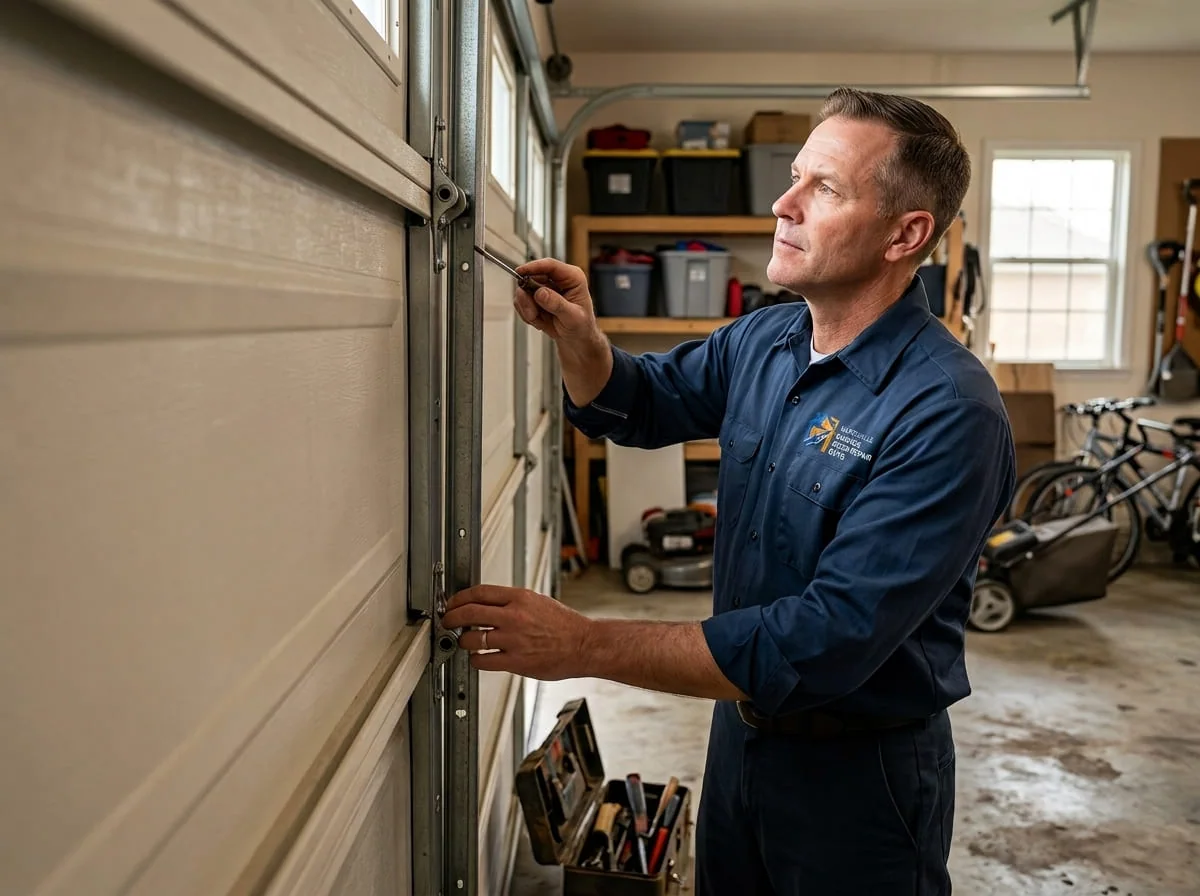
By far the most common cause of safety sensor problems is that the two sensors have drifted out of alignment with each other. This happens more often than people expect, usually from something bumping the bracket — a stored bike leaned against the track, a car door swung too wide, or a kid using the bracket as a handhold.
To check alignment: look at the indicator light on the receiving sensor (typically the one without a lens that glows when it's getting a good signal from the other side). If that light is dim, flickering, or off, the beam isn't connecting. Loosen the wing nut or screw holding the sensor bracket — don't remove it — and gently pivot the sensor a small amount at a time, pausing after each adjustment to see if the indicator light steadies out. Both sensors need to sit at the same height and point directly at each other; even a slight vertical mismatch or a few degrees of horizontal rotation is enough to break the beam.
Once the light is steady, snug the bracket back down — not overtightened, since these plastic brackets crack easily — and test the door through a full open-and-close cycle before calling it fixed.
Dirty or Obstructed Lenses
The sensor lenses sit a few inches off a garage floor, which means they collect dust, cobwebs, lawn debris tracked in on tires, and in winter, road salt spray and grime kicked up from wet undercarriages. A film of dust across the lens can weaken the infrared beam enough that the receiver reads it as broken, especially if the sensors are already slightly misaligned and running on a marginal signal to begin with.
Wipe both lenses with a soft, dry microfiber cloth. Avoid glass cleaner with ammonia, which can leave a residue film on the plastic lens over repeated cleanings. Check for anything physically blocking the beam path between the two units at floor level too — a stored garden hose, a paint can, a low shelf bracket — since even a temporary obstruction low to the ground will trip the same reversal.
Wiring Problems and Water Intrusion
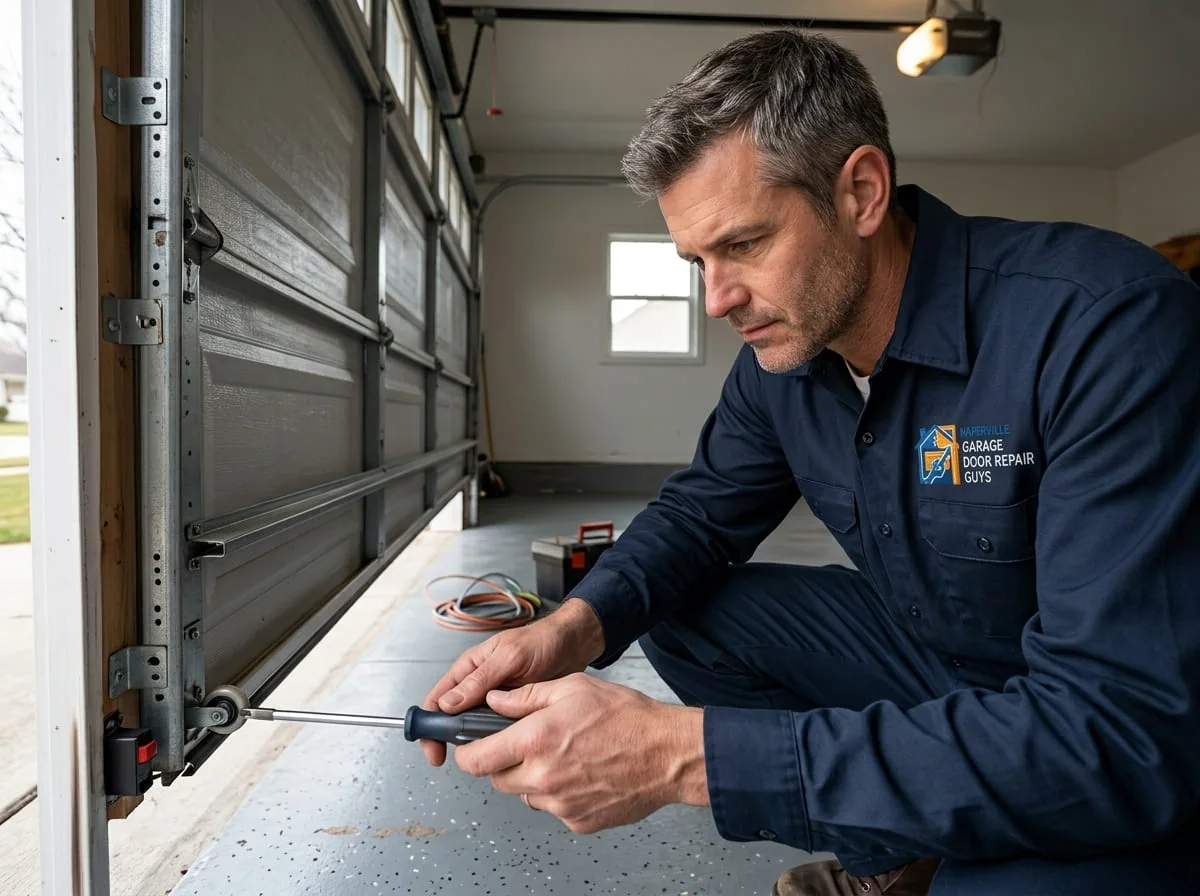
Each sensor runs on a low-voltage wire back to the opener unit, usually stapled along the track or wall. These wires are thin and get nicked during other garage projects, chewed by rodents, or pulled loose when something bumps the bracket hard enough to stress the connection point. A wire with a partial break can cause the same intermittent symptoms as sun glare or a loose bracket, which is part of why sensor troubleshooting sometimes takes patience.
Look along the visible run of wire for any spot where insulation is cracked, chewed, or pinched under a bracket. Check both ends: the screw terminals on the back of each sensor, and the terminals on the opener's motor head where the sensor wires land, usually labeled something like the wire colors involved. A wire that's technically connected but not seated firmly under the terminal screw will often work fine until vibration or temperature change loosens it further.
Garages that flood slightly at the floor drain, or that see water sheeting in during hard rain, can also get moisture into the sensor's lower housing or its wire splice points if a wire nut connection sits low. Corrosion at a splice shows up as the same flickering, unreliable signal as a physically damaged wire.
Sun Glare and Seasonal Light Angles
This one catches a lot of homeowners off guard because it seems to make no sense at first: the door works fine most of the day but won't close at a specific time, usually early morning or late afternoon. Direct sunlight hitting the receiving sensor's lens can overwhelm the infrared signal the same way headlights washing out a camera do, and the opener reads that overwhelmed signal as a broken beam.
This shows up more in homes with a garage that faces east or west, and it gets more noticeable as the sun angle shifts lower in the sky through fall and winter here in the Naperville area — the same low winter sun angle that makes evening commutes rough on Route 59 also lines up with a lot of garage doors at exactly sensor height. A simple foam sun shield or a small length of PVC pipe cut lengthwise and clipped over the sensor as a visor usually solves it without needing to move or rewire anything.
When the Sensors Test Fine but the Door Still Won't Close
If both sensor lights read steady and green, the lenses are clean, and the door still won't close, the problem may not be the sensors at all. A few things worth ruling out before assuming it's a sensor issue:
- The travel limit settings on the opener may be miscalibrated, causing the unit to think it's hitting resistance before the door is actually fully seated.
- A binding roller or track section can create enough resistance that the opener's force sensing — a separate safety system from the photo eyes — trips and reverses the door, mimicking a sensor problem.
- A weakening trolley or drive mechanism on belt and chain openers can cause similar false reversals under load.
This is the point where DIY troubleshooting reaches its useful limit. Diagnosing force-sensing and travel-limit issues means opening up the opener's settings and sometimes its housing, and a misdiagnosis can mask a genuine mechanical problem — like a spring losing tension or a track pulling away from the wall — that shouldn't wait.
What Not to Do
Some homeowners, frustrated by a door that won't close, try to bypass the sensors entirely — jumpering the wires at the opener, or disconnecting a sensor so the opener ignores it. Don't do this. It defeats the entire purpose of federally mandated entrapment protection, and it means the door will close on anything or anyone in its path with no warning. If the sensors are truly the problem, the fix is alignment, cleaning, or a wiring repair — not removal.
Also avoid forcing a stuck bracket or overtightening the mounting screw to try to lock in an alignment. Cracked brackets are a common result, and a cracked bracket won't hold alignment through normal garage vibration, which puts you right back where you started within a few weeks.
When to Call a Technician
Sensor alignment and lens cleaning are reasonable DIY tasks for most homeowners — nothing about that work involves the spring system or stored tension. But if you've checked alignment, cleaned the lenses, ruled out sun glare, and the door still won't close reliably, or if you find damaged wiring you're not comfortable repairing, it's time to call a professional. The same goes for anything involving the opener's internal settings or a suspected force-sensing issue, since those adjustments interact with the door's overall balance and travel.
Naperville Garage Door Repair Guys provides free upfront quotes before any work begins, and we can usually diagnose a sensor or opener issue on the same visit as a broader inspection, since the underlying cause sometimes turns out to be track alignment or a worn roller rather than the sensor itself.

Pete Voss
Owner and lead technician at Naperville Garage Door Repair Guys, serving Naperville, IL since 2012.
FAQs
Why does my garage door reverse right before it touches the floor?
That's usually the sensors, but a reversal that happens only in the last inch or two of travel can also point to a travel-limit setting that's slightly off, making the opener think it's met resistance early. Check sensor alignment first since it's the more common cause, and if that doesn't resolve it, the limit settings likely need adjustment.
Can I just disconnect the safety sensors if they're causing problems?
No. These sensors are required by federal safety standards on openers made after 1993 specifically to prevent the door from closing on a person, pet, or object. Bypassing them removes that protection entirely. The fixes above address nearly all sensor issues without needing to disable anything.
How much does it cost to fix garage door safety sensors?
It depends on the cause. Realigning or cleaning sensors is often a no-cost adjustment if it's something you catch yourself. A wiring repair or full sensor replacement costs more depending on how much wire needs to be run and whether the bracket or unit itself needs replacing. We provide a free, upfront quote before starting any work so you know the cost before we touch anything.
Is it safe to keep using the garage door if the sensors seem unreliable?
Treat an unreliable sensor as a real safety issue, not a nuisance. If the beam is inconsistent, the door could close without detecting an obstruction on the one time it matters. Until it's fixed, watch the door manually through a full close cycle each time, and keep kids and pets clear of the door's path.
Why does my door only fail to close in the morning or evening?
Direct, low-angle sunlight hitting the receiving sensor's lens can overpower the infrared beam, which the opener reads as an obstruction. This is common on east- or west-facing garages and gets more noticeable as the sun sits lower in the sky through fall and winter. A small shade or visor over the sensor usually fixes it.
How long does a sensor repair take?
Alignment and cleaning take a few minutes once you know what to check. A wiring repair or sensor replacement during a service visit is typically a same-day fix, often completed within the same appointment as an inspection of the opener and track.
Have a Garage Door Problem Right Now?
Skip the guesswork — call Naperville Garage Door Repair Guys for a fast, honest diagnosis.