
Noisy Garage Door Repair in Naperville, IL
A loud garage door is usually telling you something specific is wrong. Our technicians track down the actual source of the noise and fix it, instead of just spraying lubricant and hoping.
- Locally owned since 2012
- Insured, background-checked techs
- Free upfront quotes
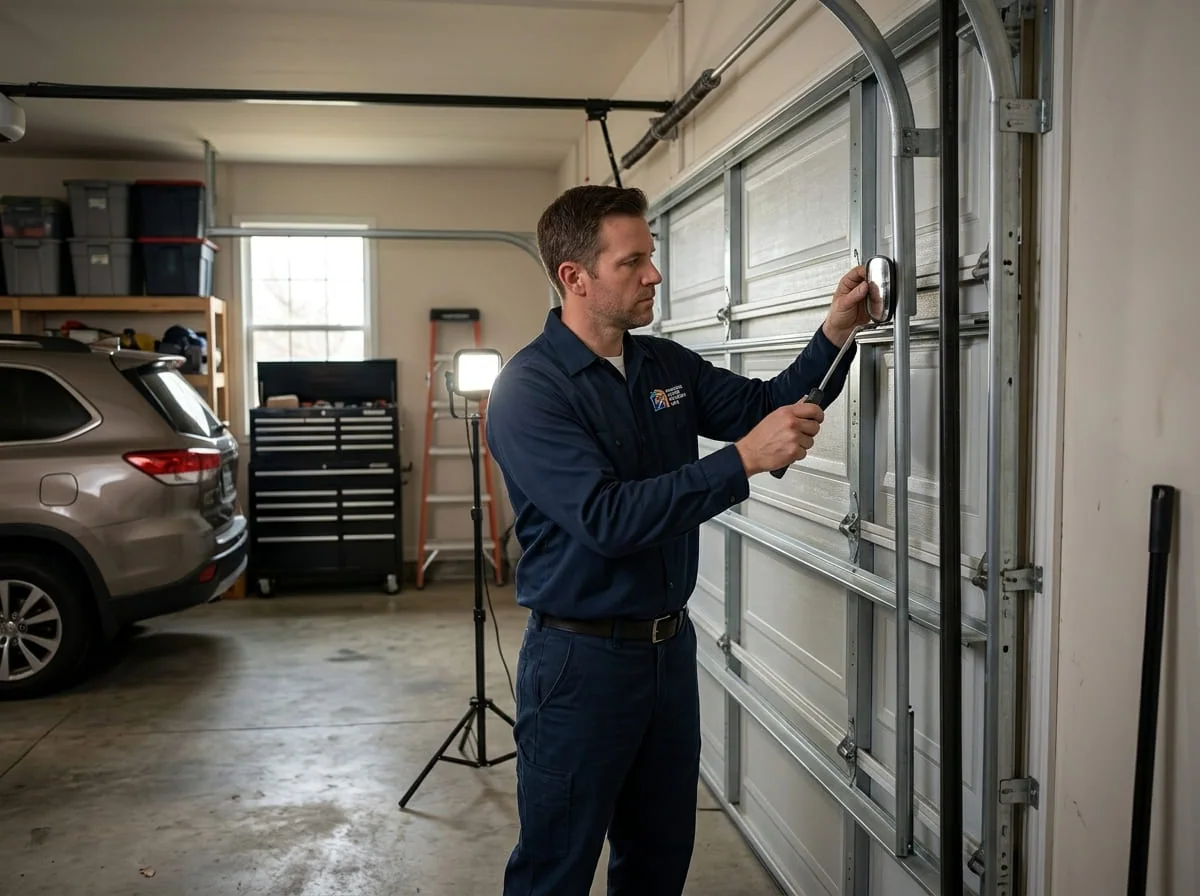
A garage door that used to open quietly and now grinds, squeals, bangs, or rattles every time you use it isn't just annoying. Noise is almost always a symptom of wear somewhere in the system — rollers, hinges, springs, tracks, or the opener drive — and the specific sound usually points to the specific part. A high-pitched squeal often means dry hinges or worn rollers. A rhythmic thump or bang can mean a bent track or a loose roller carriage. A metallic pop or snap, especially in cold weather, can mean a spring under stress.
Naperville Garage Door Repair Guys has been diagnosing and fixing noisy doors across Naperville and the western suburbs since 2012. Pete Voss and his crew know that the fix for a squeak is almost never the same as the fix for a bang, so they start every noise call with a hands-on inspection rather than a guess. That matters most here in the Chicago suburbs, where our winters put extra stress on hardware that's already starting to wear.
If your garage door has gotten noticeably louder over the past few weeks, or it's always made a little noise and now it's worse, it's worth having it looked at before a worn part fails and leaves the door stuck open or closed. We offer same-day appointments where possible and provide an honest, upfront quote before any work begins.
What Different Garage Door Noises Usually Mean
Homeowners often describe garage door noise in terms our technicians recognize right away, because each sound tends to trace back to a specific cause:
- Squeaking or squealing: usually dry or worn hinges, rollers, or the opener's drive mechanism.
- Grinding or scraping: often worn nylon rollers, a bent track, or debris built up in the track channel.
- Rattling: loose hardware — hinges, brackets, or the track bolts — that has worked itself loose over years of vibration.
- Banging or a loud thump: frequently a loose roller carriage, a section that's slightly out of alignment, or a chain-drive opener that needs tensioning.
- A sudden loud pop or bang, especially in winter: this can mean a torsion spring under stress or a spring that has already broken.
None of these are things to ignore. A door that's noisy today is a door with a part wearing out, and worn parts tend to fail at inconvenient times — usually the coldest morning of the year, when you're already running late.
How We Diagnose a Noisy Garage Door
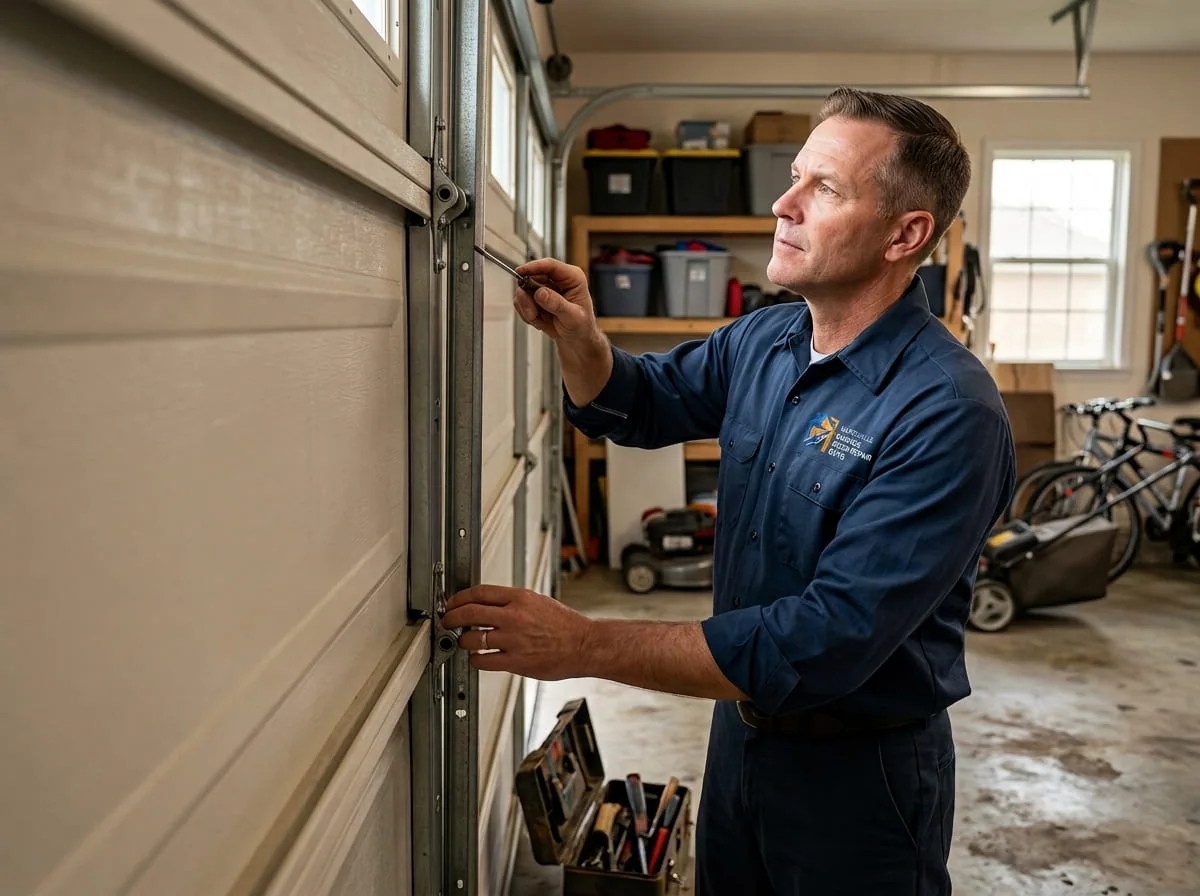
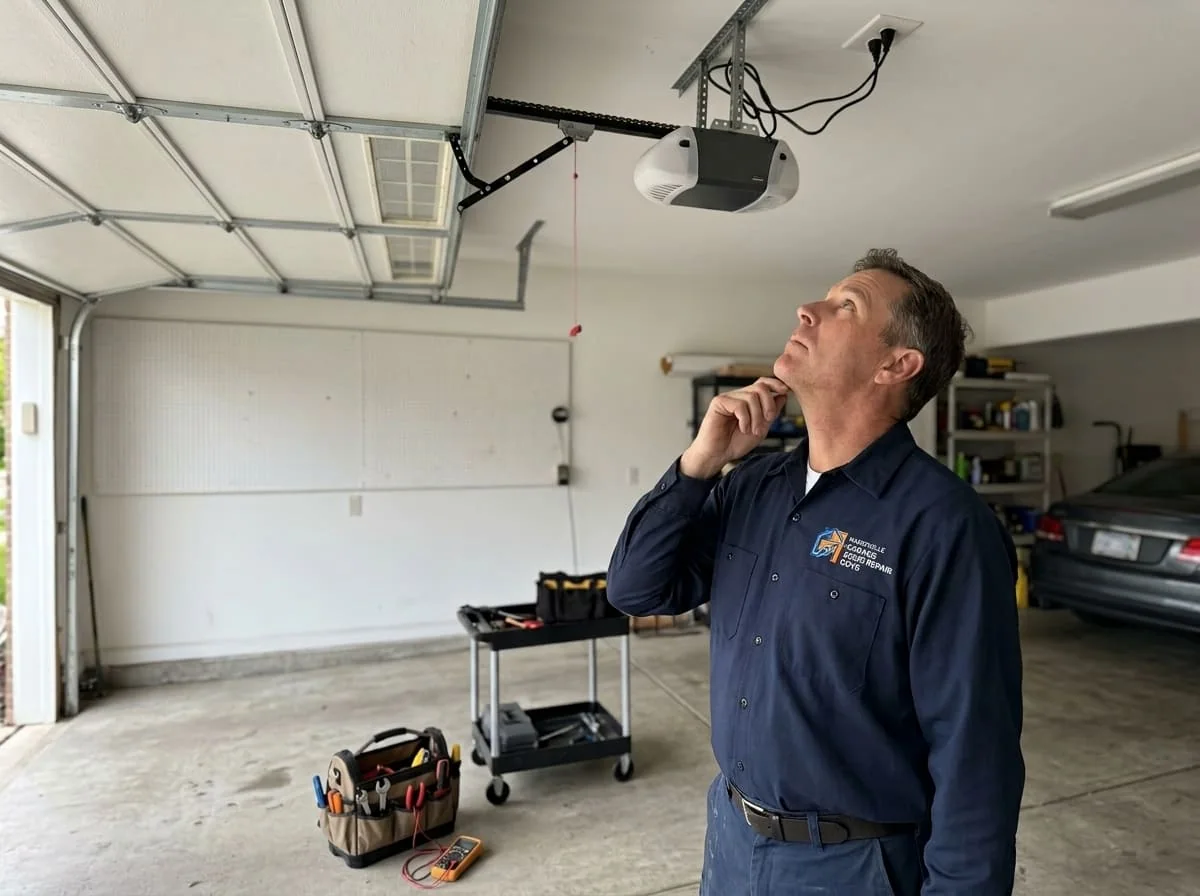
Our technicians run the door through a full open-and-close cycle while listening and watching for exactly where the noise originates. That means checking the rollers for flat spots or cracking, the hinges for wear at the pivot points, the tracks for dents or misalignment, the springs for visible gaps or rust, and the opener's drive system — chain, belt, or screw — for looseness or lack of lubrication.
Most of the time the fix is straightforward: cleaning and lubricating the right points with the right lubricant, tightening hardware to the correct torque, replacing worn rollers or hinges, or realigning a track that's shifted slightly out of position. Occasionally the noise points to something more serious, like a spring nearing the end of its rated cycle life or a bent track that needs replacing rather than adjusting. When that's the case, we explain exactly what we found and what the options are before doing any work.
Why Guessing at a Garage Door Noise Fix Rarely Works
It's tempting to grab a can of WD-40 and spray everything that moves. The problem is that general-purpose lubricants and greases attract dust and grit, and spraying the wrong lubricant on the wrong part can make grinding worse over time rather than better. Rollers and hinges need a lubricant designed for that kind of contact, applied to specific points, not a blanket spray.
Track adjustments and hardware tightening also carry risk if you're not familiar with how a torsion spring system stores energy. Tracks are bolted under tension from the door's weight and the spring system, and forcing a bent section back into place without releasing that tension can cause the door to drop or the track to fail suddenly. Torsion springs themselves should never be adjusted or removed by anyone without the right tools and training — the mangled winding bar Pete Voss still keeps in his toolbox is a reminder of how badly that can go for a homeowner working alone.
How Naperville Winters Make Garage Door Noise Worse
Naperville's cold, humid-continental winters are genuinely hard on garage door hardware. When temperatures drop toward the January average low near 16°F, metal track sections and hinges contract slightly, which can turn a minor misalignment into a noticeable clank or bind. Torsion springs lose some tension as steel contracts in the cold, which is part of why they're more prone to snapping in winter — and a spring nearing the end of its life will often get audibly louder before it fails outright. Nylon rollers get more brittle in the cold too, so a roller that rolled quietly all summer can start grinding once temperatures drop.
Freeze-thaw cycles that shift a garage's concrete slab slightly can also throw a track's alignment off by just enough to create noise that wasn't there the season before. If your door got noticeably louder as the weather turned, that's a common and predictable pattern here in the western suburbs, not a coincidence.
Why Naperville Homeowners Call Us for Noise Repairs
Naperville Garage Door Repair Guys is a locally owned and operated company that has served Naperville, Plainfield, Bolingbrook, and the surrounding suburbs since 2012. Our technicians are background-checked and insured, and we quote every repair honestly before touching the door — no surprise charges once the truck is in your driveway.
Because we diagnose the actual cause of the noise instead of defaulting to a full parts replacement, most noise calls get resolved with a targeted repair: cleaning, lubrication, hardware tightening, or replacing the specific worn component. We carry the common wear parts on the truck, so many noise repairs are completed in a single visit.
What to Expect When You Call
Call or request an appointment
Describe the noise you're hearing and when it happens, and we'll schedule a same-day or next-day visit where possible.
On-site inspection
Your technician runs the door through a full cycle, listening and checking rollers, hinges, tracks, springs, and the opener drive to isolate the source.
Upfront quote
You'll get a clear explanation of what's causing the noise and an honest price for the repair before any work begins.
Repair and test
The technician completes the repair, then cycles the door multiple times to confirm the noise is gone and everything is running smoothly.
Follow-up guidance
We'll point out anything else worth watching, like a roller or spring that's aging but not yet urgent, so you're not caught off guard later.
Noisy Garage Door Repair in Naperville, IL FAQs
Why did my garage door suddenly get so much louder?
A sudden increase in noise usually means a part has crossed from merely worn to actively failing — dry hinges, a flat-spotted roller, loose hardware, or a spring losing tension. Cold weather often accelerates this, which is why noise complaints tend to spike in the Chicago suburbs during winter.
Can I fix a noisy garage door myself?
Cleaning and lubricating rollers and hinges is reasonable for most homeowners. Adjusting tracks or anything involving the torsion spring system is not, since those parts are under significant tension and can cause injury or door damage if handled without the right tools and training.
How much does it cost to fix a noisy garage door?
It depends on the cause — a lubrication and hardware tightening visit costs less than replacing worn rollers or a bent track. We provide a free, upfront quote after inspecting the door so you know the exact price before any work starts.
Is a noisy garage door dangerous?
It can be, depending on the cause. A grinding roller or loose hinge is mostly a wear issue, but a popping or banging noise from the spring system can signal a spring nearing failure, which can be dangerous to be near when it lets go.
Will spraying WD-40 or oil on the door fix the noise?
Sometimes temporarily, but general household lubricants often attract dust and grit that make grinding worse over time. Rollers, hinges, and tracks each need the right type of lubricant applied to the right points.
How long does a noise repair visit take?
Most noise diagnoses and repairs — lubrication, hardware tightening, or swapping worn rollers or hinges — are completed in a single visit, often within an hour or two, since our technicians carry common wear parts on the truck.
Does a noisy garage door opener mean I need a new opener?
Not usually. Chain and belt drives can get loud as they age or lose tension, but that's often adjustable or repairable rather than a sign the whole opener needs replacing. A technician can tell you which it is after inspecting the drive system.
Need Noisy Garage Door Repair in Naperville, IL?
Naperville Garage Door Repair Guys is ready to help — call now for a free, upfront quote.