
Why Garage Door Springs Break in Winter
Torsion springs fail more often between December and February than any other time of year. Here's the actual mechanics behind winter spring failure and what Naperville homeowners can do about it.
The Physics of Cold Steel Under Tension
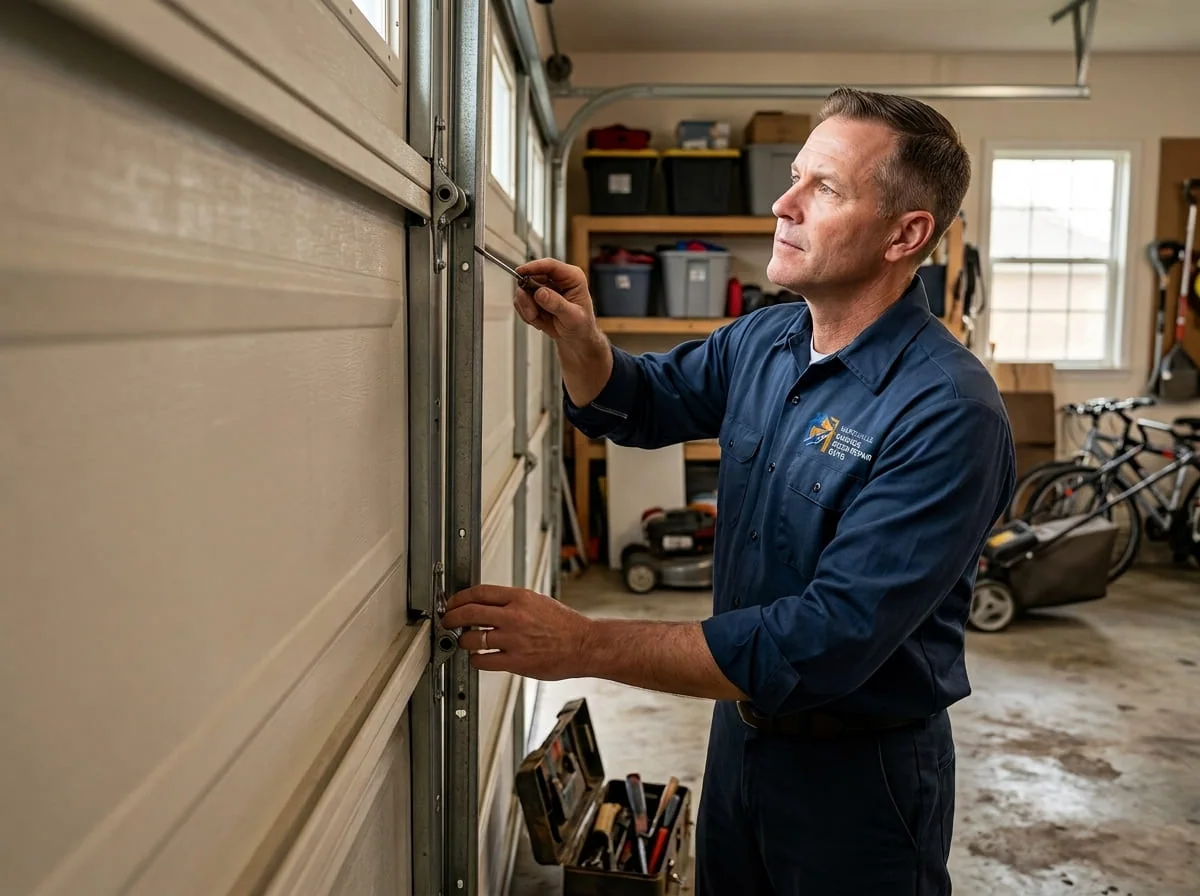
A torsion spring spends its whole life wound tight above the door, holding enough stored energy to lift a 150 to 200 pound sectional door dozens of times a day. That tension never really lets up, even when the door is sitting closed overnight. What changes with the season is the steel itself. Cold metal is stiffer and more brittle than warm metal, and it has less give when the coils compress and stretch through each cycle of opening and closing. A spring that flexed smoothly in July can develop tiny stress points in January simply because the material can't absorb the same movement as easily.
This is why so many spring failures happen on the coldest mornings of the year, often with the door sitting closed and nobody touching it. The spring isn't being overworked in that moment — it's giving out because months of accumulated micro-fatigue finally reached a wire that's now too stiff to bend around the flaw. Homeowners frequently describe hearing a loud bang from the garage in the early morning hours during a cold snap. That's almost always a torsion spring letting go under its own static tension, not from someone using the door.
Cycle Life: Every Spring Has a Countdown
Every torsion spring is manufactured to a cycle-life rating, meaning it's engineered to handle a certain number of open-and-close cycles before metal fatigue makes failure likely. DASMA (the Door and Access Systems Manufacturers Association) publishes the industry reference standards for this, including ANSI/DASMA 102 and technical data sheet TDS-190, which cover spring performance and cycle testing for garage door systems. A standard residential spring is typically rated for somewhere in the range of 10,000 cycles, with higher-cycle springs available for doors that get opened many times a day.
One cycle equals one full open-and-close. A household that runs two cars in and out twice a day, plus the occasional extra trip for the kids' bikes or a delivery, can rack up 8 to 10 cycles daily without anyone thinking about it. Run that math over several years and a spring can approach the end of its rated life well before a homeowner expects trouble. Winter doesn't add extra cycles by itself, but the added brittleness of cold steel means a spring nearing the end of its cycle life is far more likely to fail in December or January than it would be to survive to the following spring.
How a Naperville Winter Makes It Worse
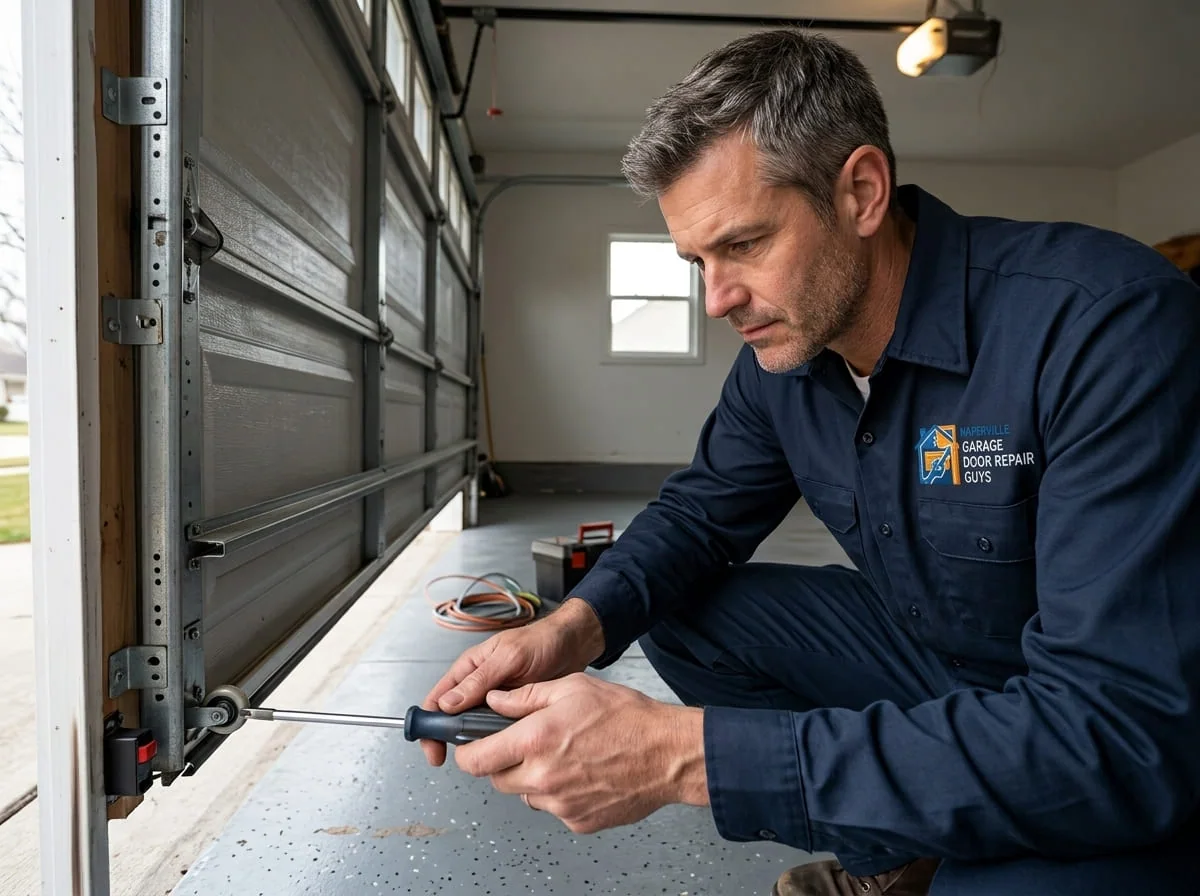
Naperville sees a genuine winter — January's average high sits around 30°F with lows near 16°F, and the western suburbs get their share of snow most seasons. That kind of cold does more to a garage door system than just stress the spring. Metal components contract slightly in the cold, which can tighten the tolerances in the tracks and cause a door to bind or drag as it travels. Nylon rollers get harder and more brittle at low temperatures, adding friction exactly when the spring is least able to compensate for it. Opener lubricant thickens in an unheated garage, which can make the motor work harder and transfer more strain back through the drive system and into the spring.
Freeze-thaw cycles matter too. A concrete garage slab can shift by fractions of an inch as the ground beneath it freezes and thaws repeatedly through a Chicago-area winter, and that movement can throw off track alignment over time. None of these things break a spring on their own, but they stack the deck. A spring that's already near the end of its cycle life, in a garage with slightly misaligned tracks, hauling stiffened rollers through cold air, is under more real load than the same spring would see on a mild October afternoon — even though nobody changed how often the door gets used.
Warning Signs a Spring Is Close to Failing
Most torsion springs give some warning before they let go completely, though the window can be short once cold weather sets in. Watch for these signs, especially from late fall through the coldest stretch of winter:
- A visible gap or separation between coils when the door is closed, rather than the coils sitting tight against each other.
- A door that feels noticeably heavier to lift by hand, or an opener that strains, hesitates, or makes a louder motor sound than usual.
- The door opening unevenly, tilting to one side, or appearing crooked in the frame.
- A grinding, popping, or squeaking sound from the spring area near the top of the door, separate from normal roller noise.
- Small flakes of rust or metal dust on the floor beneath the spring, which can indicate corrosion weakening the wire.
- A loud bang from the garage with the door still closed and the opener untouched — often the sound of a spring failing under its own static tension overnight.
Any one of these on its own is worth a look. Several together, especially heading into a cold week, are a strong signal to get the spring inspected before it fails on its own schedule instead of yours.
Torsion vs. Extension Springs: Different Failure, Different Danger
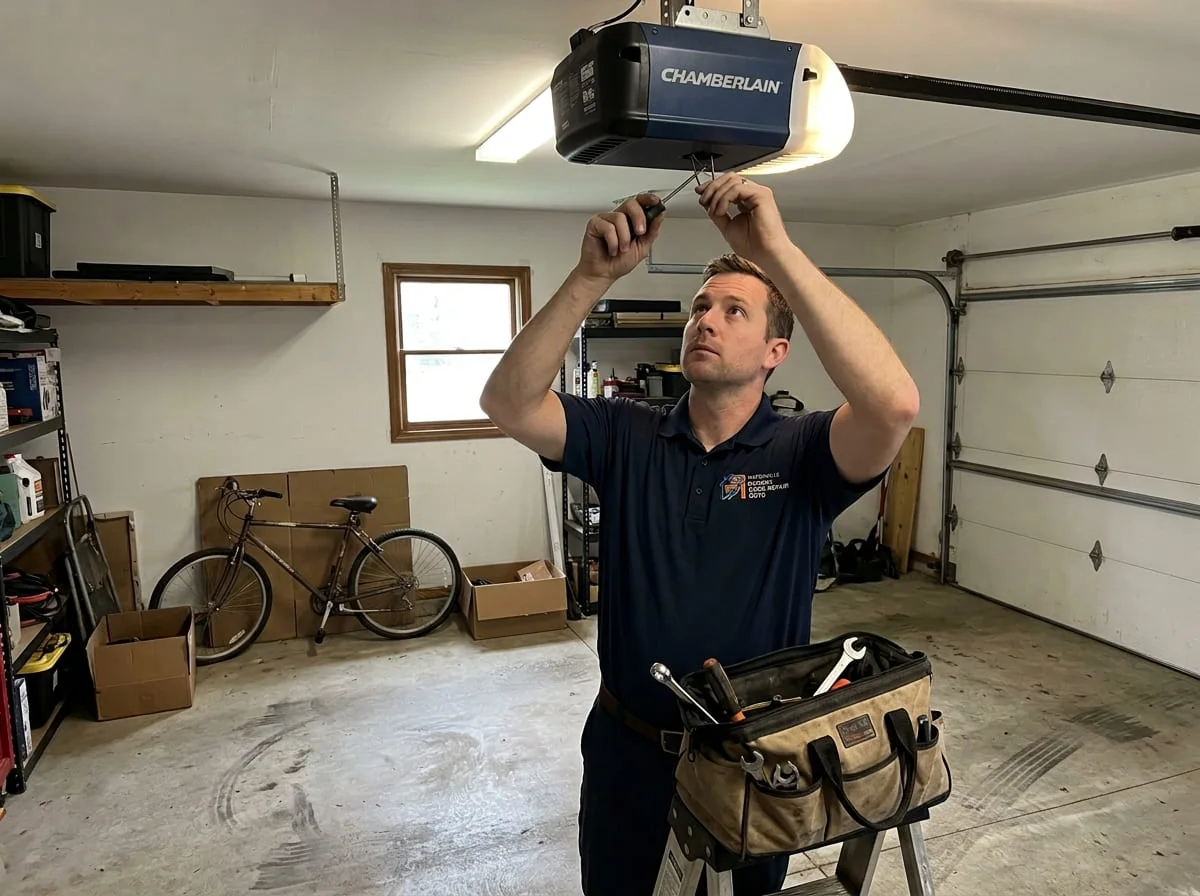
Most residential sectional garage doors installed today use a torsion spring system, mounted on a shaft directly above the door opening. Older homes and some lighter doors still use extension springs instead, running along the horizontal tracks on either side of the door. Both store energy the same basic way, but they fail differently and carry different safety considerations. The U.S. Consumer Product Safety Commission has published guidance specifically because extension springs, when they let go, can release stored energy along the length of the spring itself — which is why safety cables or containment cables that run through the coil are considered essential on extension spring setups, to keep a failed spring from becoming a projectile.
Torsion springs fail in place on their mounting shaft rather than flying off a track, but they carry far more stored tension pound for pound, and that tension is concentrated right above where a person's head and hands typically are when working near the door. Neither type is something to treat casually, and the repair approach differs enough between the two that a technician needs to know which system they're dealing with before doing anything.
Why This Isn't a Weekend Project
I've been doing this work since 2012, and I got serious about handling spring and cable jobs strictly by the book after watching a homeowner attempt a DIY torsion spring adjustment that ended with him in the emergency room. I still keep the bent winding bar from that job in my toolbox. A torsion spring under full tension can release with enough force to break bones, and the tools involved — winding bars, vice grips used as makeshift clamps, ladders positioned under a loaded spring — are exactly the kind of setup that turns a bad afternoon into a hospital visit.
The tension in a fully wound residential torsion spring is not intuitive to estimate by eye, and the winding process requires the right bars, seated correctly, with the technician's body positioned out of the spring's path the entire time. This is genuinely one of the few repairs around a house where the safe move and the cheap move are not the same move. It's also a fast job for someone who does it every week, which keeps the honest, upfront cost of having it done professionally more reasonable than most homeowners expect.
A Seasonal Checklist to Reduce Winter Failures
You can't stop steel from behaving the way steel behaves in the cold, but a few habits meaningfully reduce the odds of an unexpected failure during the worst weeks of winter:
- Do a visual check monthly through fall and winter — look at coil spacing, listen for new sounds, and watch how evenly the door travels.
- Have the door balance tested before the first hard freeze. A door that's out of balance puts uneven load on the spring and accelerates fatigue.
- Avoid leaving the garage door open for long stretches during cold snaps. Temperature swings between open and closed positions add extra stress cycling to a system that's already working harder in the cold.
- Keep tracks and rollers clean of winter debris, salt residue, and ice buildup, which add friction the spring has to work against.
- Schedule a tune-up in early fall rather than waiting for a January morning to find out something's wrong. A technician can spot a spring nearing the end of its cycle life while there's still time to replace it on your schedule.
- Never attempt to lubricate, adjust, or wind a torsion spring yourself — leave that specific task to a professional, even if you're comfortable with other garage door maintenance.
What to Do the Moment a Spring Breaks
If you hear that characteristic bang, or notice the door won't budge and the opener is straining, stop trying to open it. A broken spring means the door no longer has the counterbalance it needs, and forcing an opener to lift the full weight of the door can burn out the motor or strip the drive gear, turning one repair into two. If the door is already open when a spring fails, be careful — it may not stay in place, and it can drop faster than expected. Leave it and keep people and vehicles clear until a technician has looked at it.
Naperville Garage Door Repair Guys offers same-day appointments where possible and returns after-hours calls first thing the next business day, so a spring that fails on a Sunday night doesn't mean a week of being locked out of your own garage. Every visit includes a free, upfront quote before any work begins, so you know what you're dealing with before we touch the door.

Pete Voss
Owner and lead technician at Naperville Garage Door Repair Guys, serving Naperville, IL since 2012.
FAQs
How much does it cost to replace a broken garage door spring?
Cost depends on factors like whether the door uses one spring or two, the spring's cycle-life rating, the size and weight of the door, and whether other components like cables or rollers need attention at the same time. We don't publish blanket pricing because those variables genuinely change the job, but every visit starts with a free, honest, upfront quote before any work begins, so there are no surprises.
Can I replace a torsion spring myself?
We strongly recommend against it. A fully wound torsion spring stores enough tension to cause serious injury if it releases unexpectedly, and winding or unwinding one safely requires the right bars and technique. This is one of the few home repairs where professional help is genuinely the safer and more practical choice, not just the more convenient one.
How long do garage door springs typically last?
Most residential torsion springs are rated for around 10,000 cycles under DASMA's industry standards, with one cycle being one full open-and-close of the door. A household that opens the door several times a day can reach that number in several years, though usage, humidity, and winter temperature swings all affect how long a given spring actually lasts before failing.
Is it normal for a spring to break overnight in cold weather?
Yes. Cold makes the steel in a torsion spring stiffer and more brittle, so a spring that's already near the end of its cycle life is more likely to fail under its own static tension during a cold snap, even with the door sitting closed and untouched. That loud bang some homeowners hear in the middle of a winter night is almost always this happening.
What's the difference between torsion and extension springs?
Torsion springs mount on a shaft above the door and twist to store energy, while extension springs stretch along the tracks on either side of the door. They fail differently and carry different safety requirements — extension springs need safety containment cables per CPSC guidance, since a failure can release energy along the length of the spring. We cover the differences in more detail in our guide to torsion vs. extension springs.
Can a broken spring damage my garage door opener?
It can. Without the spring's counterbalance, the opener has to lift the full weight of the door alone, which can burn out the motor or strip the drive gear if someone keeps pressing the button after a spring fails. If a spring breaks, stop using the opener and have the door looked at before running it again.
Have a Garage Door Problem Right Now?
Skip the guesswork — call Naperville Garage Door Repair Guys for a fast, honest diagnosis.