
How to Read a Garage Door Repair Quote
Garage door repair quotes can look like a wall of unfamiliar line items. Here's what each part of a legitimate quote actually means, and the questions worth asking before you sign off on the work.

Why Two Quotes for the Same Door Can Look Nothing Alike
Hand the same broken garage door to three different repair companies and you can end up with three estimates that barely resemble each other. That's not automatically a sign someone is padding the bill. Garage door repair is diagnosis-driven work, not a fixed menu item like an oil change, and the quote reflects a set of decisions a technician makes standing in front of your specific door.
A torsion spring quote depends on the wire diameter and the inside diameter of the spring, the length of your door's drum-to-drum span, and the cycle rating the technician selects to replace it. DASMA, the industry association that publishes engineering standards for garage doors, references cycle life testing under ANSI/DASMA 102 and TDS-190 — in plain terms, springs are rated for a number of open-close cycles before they're expected to fatigue and break. A higher-cycle spring costs more as a part but is being sized for how often your household actually uses the door. That single decision changes the parts line on your quote before labor even enters the picture.
I've been doing this work in the western suburbs since 2012, and the estimate that looks the cheapest on paper is sometimes the one where a technician quoted a lighter-duty spring, a cable without matching factory-length adjustment, or skipped inspecting the rest of the hardware entirely. A quote is really a written record of what someone found wrong and what they intend to do about it. Once you know how to read it, the differences between bids start making a lot more sense.
The Line Items a Legitimate Quote Should Include
A written quote worth signing should be itemized, not a single lump number. At minimum, expect to see the diagnostic or service call charge listed separately from repair costs, a parts line that names the actual components being replaced, a labor line, and any disposal charge for hauling away old springs, cable, or a damaged section of door. If evening or weekend scheduling applies, that should be stated plainly rather than folded invisibly into a bigger number.
| Line item | What it covers |
|---|---|
| Diagnostic / service call | The technician's time to inspect the door, test the opener, and identify the actual failure point |
| Parts | Springs, cables, rollers, hinges, track sections, or opener components, named individually with size or type |
| Labor | Time and skill to safely remove the failed part and install the replacement, including any adjustment to balance or alignment |
| Disposal | Hauling away the old spring, cable, or panel, especially heavier parts like a full section of door |
| Scheduling notes | Whether the appointment is standard business hours or an after-hours callback |
If a quote arrives as a single round number with no breakdown, it's fair to ask the technician to walk you through what makes up that figure. A company with nothing to hide will do this without hesitation.
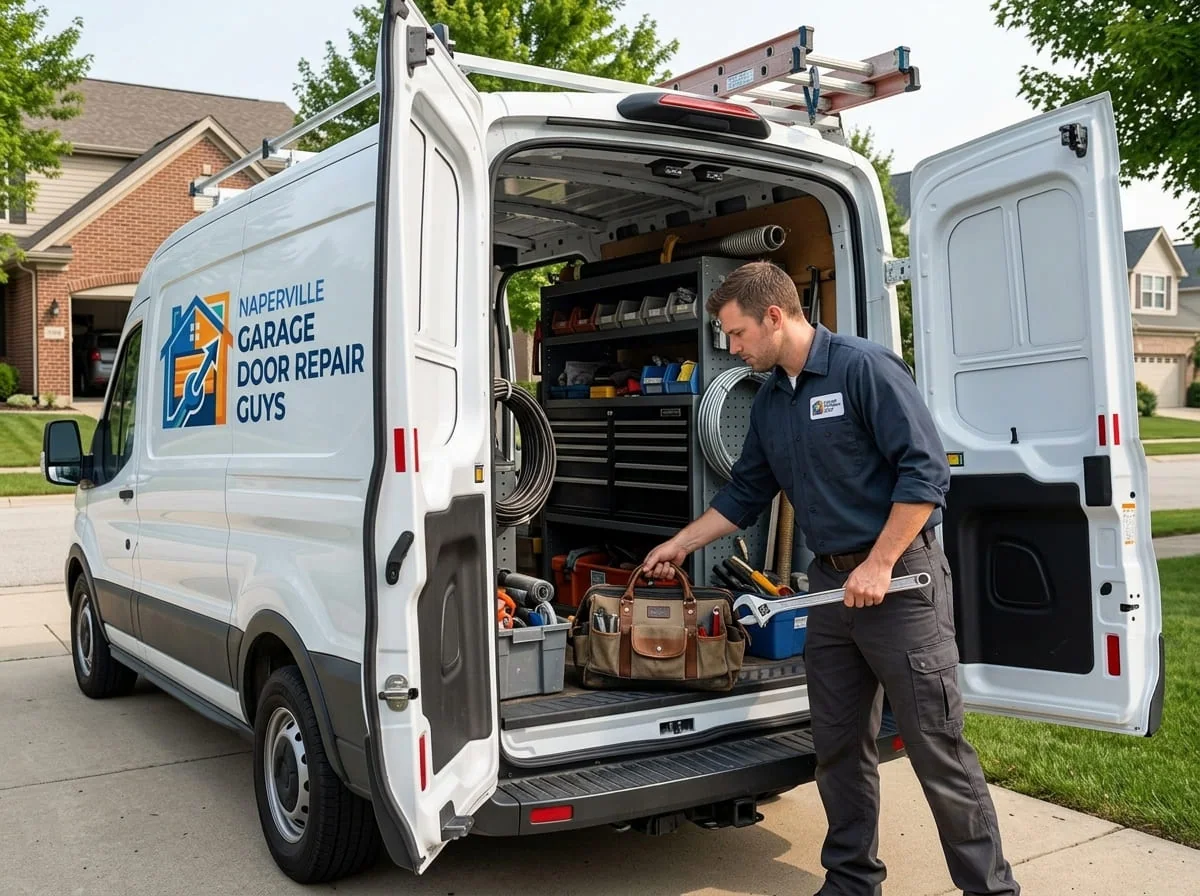
Reading the Parts Line: Springs, Cables, Rollers, and Track
Springs are the most common repair line item, and they come in two very different families. Torsion springs mount on a shaft above the door and wind under tension; extension springs stretch along the horizontal tracks on either side. Most residential sectional doors installed in the last couple of decades use torsion springs, which handle the weight of the door more evenly and tend to last longer under regular use. Extension springs are still common on older doors, and the U.S. Consumer Product Safety Commission has published guidance on why extension spring systems need containment cables running through the coil — without one, a spring under tension that breaks has nowhere to go but loose in your garage.
When a quote lists a spring replacement, it should note whether it's one spring or a pair. Torsion springs are almost always replaced in pairs even if only one has broken, because the surviving spring has typically logged close to the same number of cycles and is not far behind on fatigue life. Replacing only the broken one is a shortcut some companies take to shave a few dollars off the quote, and it usually means a second service call within a year or two.
Cables, rollers, and track show up on quotes less often than springs, but they matter for the same reason. A cable line should specify whether it's a lift cable or a safety cable. A roller line should note whether steel or nylon rollers are being installed — nylon runs quieter but is more prone to becoming brittle in cold weather, which matters for anyone parking a car in an unheated Naperville-area garage through January. Track work should specify whether it's a spot repair to a bent section or a full realignment, since a door that's been running off-track even briefly can throw off the whole system's geometry.
What You're Actually Paying for in Labor
Labor on a garage door quote isn't just time spent turning a wrench. Winding a torsion spring to the correct tension requires the right size winding bars, a specific sequence of quarter-turns, and a technician who has done it enough times to know what correct tension feels like under the bar. Rushed or improvised spring work is exactly how people get hurt, and it's part of why I run my crew strictly by the book on every spring and cable job — I still keep a bent winding bar in my own toolbox from a DIY attempt that ended at the emergency room, as a reminder of what happens when this step gets shortcut.
Labor time also covers testing the door's balance after the repair, checking that the opener's force and travel limits are still set correctly, lubricating hardware that was disturbed during the repair, and confirming the safety reversal sensors are aligned before the technician leaves. A door that closes but hasn't been rebalanced or retested is a door that's likely to come back as a service call within weeks. If a quote's labor line seems high relative to the parts cost, ask what's included — a thorough technician is doing more than swapping one broken piece for a new one.
- Time to safely release tension from the old spring or cable before removal
- Correct winding and tensioning of the replacement spring to match your door's weight
- Rebalancing the door and retesting the opener's force settings
- Lubrication and a final safety check of sensors and reversal function
Red Flags Worth Pausing On
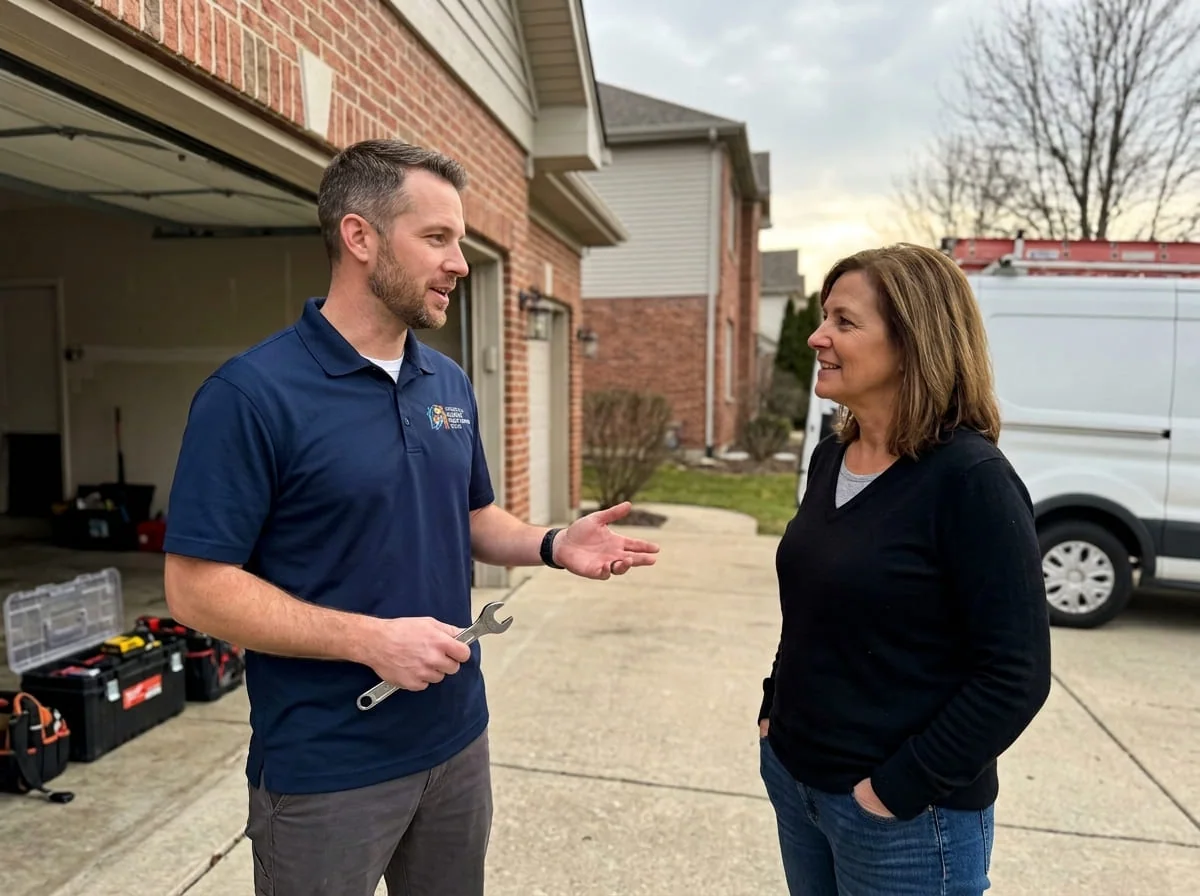
Most garage door companies in the western suburbs are straightforward to work with, but a few patterns are worth watching for. A verbal-only quote with no written breakdown makes it hard to know what you agreed to if the final bill comes in higher. Heavy pressure to add unrelated services on the spot — a full opener replacement tacked onto a simple roller repair, for example — deserves a second opinion, especially if the technician can't explain in plain terms why the additional work is necessary right now.
Be cautious of anyone asking for full payment before any work begins, as opposed to payment on completion. It's also reasonable to ask to see the failed part once it's removed. A broken torsion spring, a frayed cable, or a bent track section is visible evidence of what went wrong, and a technician who has nothing to hide will show it to you without treating the question as an inconvenience.
A good rule of thumb: if a company can't explain why a part failed in terms you understand, be skeptical of how confidently they've priced fixing it.
Questions Worth Asking Before You Sign
A few direct questions can save a lot of confusion later. Bring these to any technician before you approve a repair:
- What exactly failed, and can you show me the part?
- Is this quote itemized, and can I see parts and labor listed separately?
- If it's a torsion spring, is it being replaced as a pair, and why or why not?
- Is there a disposal fee for the old parts, and is it already included in this number?
- Is this repair workmanship-backed, and what does that cover?
- Could the price change once you start the work, and under what circumstances?
None of these questions are confrontational. A technician who does honest work expects to answer them and generally welcomes a homeowner who's paying attention. Cost questions are also fair game to ask up front — a trustworthy company can explain what factors drive a repair's price even before giving you a number, and should be willing to put together a written estimate before any work starts.
How Illinois Weather Changes the Timing Conversation
Weather doesn't just affect what breaks on a garage door — it affects how a quote gets scheduled. Cold temperatures cause torsion springs to contract, which increases tension and makes an already-fatigued spring more likely to snap in January than in July. The same cold makes metal tracks contract slightly and nylon rollers turn brittle, and freeze-thaw cycles common to the Chicago suburbs can shift a garage's concrete slab enough to throw off track alignment over a season. None of that changes what a legitimate parts and labor breakdown looks like, but it does mean winter repairs sometimes come with a scheduling note rather than a price surprise.
We don't advertise round-the-clock service, because that wouldn't be honest. What we do offer is priority same-day scheduling where possible and a callback on after-hours calls first thing the next business day, so a door that fails on a fifteen-degree night doesn't sit unaddressed through the weekend. If a quote includes an after-hours or expedited scheduling note, ask what drove that decision — a door that won't close at all in freezing weather is a different priority than a slow-closing door that can safely wait until Monday.
What We Put on Every Quote We Write
Every estimate our technicians write out is free, itemized, and given before any work begins — parts named individually, labor explained, and nothing folded into a vague total. We're locally owned and family-run, our technicians are insured and background-checked, and we've been doing this work across Naperville and the surrounding suburbs since 2012. Repairs come workmanship-backed, and if a repair doesn't hold up the way it should, we want to hear about it.
My philosophy going back to when I ran this company solo out of one truck hasn't changed: explain what's actually wrong before touching anything, price it honestly, and don't leave a job half-finished. Reading your own quote with a little more context is one more way to make sure that's exactly what you're getting, whoever ends up doing the work.

Pete Voss
Owner and lead technician at Naperville Garage Door Repair Guys, serving Naperville, IL since 2012.
FAQs
Is a written garage door repair quote really free?
Yes, at least from us and most reputable companies in the area. A technician inspects the door, diagnoses the actual failure, and writes up an itemized estimate before any repair work starts or any payment changes hands. You should never be charged just to receive a number.
Why did two companies quote different prices for the same repair?
Differences usually come down to what's actually being replaced, not dishonesty on either side. Spring cycle rating, whether a torsion spring is replaced solo or as a matched pair, the type of roller or cable specified, and whether the technician is also addressing related worn hardware can all shift the number. Ask each company to itemize parts and labor separately so you're comparing the same scope of work.
Should I pay a deposit before the repair work starts?
Be cautious of any company asking for full payment upfront before work begins. It's standard and reasonable to pay once the repair is complete and you've confirmed the door operates correctly. A written quote should make clear when payment is expected.
Can I negotiate a garage door repair quote?
You can always ask questions about a quote's line items, request a second opinion, or ask whether a less expensive part option exists for your situation. What shouldn't change is the honesty of the diagnosis itself — a legitimate quote reflects what's actually broken, not a number that flexes based on how hard you push back.
What's a reasonable diagnostic or service call fee?
We don't publish a fixed number here because it genuinely varies by company and situation, but it should always be stated clearly on your quote as its own line item, separate from parts and labor. If a technician can't tell you what the service call covers, ask before they start.
Is it a bad idea to just go with the cheapest quote?
Not automatically, but it's worth understanding why it's cheaper before you accept it. A lower price sometimes reflects a lighter-duty part, a single spring replaced instead of a matched pair, or skipped steps like rebalancing the door and testing the opener afterward. Compare what's actually included, not just the total at the bottom.
Have a Garage Door Problem Right Now?
Skip the guesswork — call Naperville Garage Door Repair Guys for a fast, honest diagnosis.